In the modern manufacturing world, laser marking has emerged as a crucial technology for creating high-quality, permanent marks on a wide variety of materials. One of the most challenging materials to mark consistently is plastic, due to its diverse properties and formulations. However, with the introduction of receptive additives, laser marking of plastic components has become more efficient and reliable. This article explores the process of laser marking plastics, the role of receptive additives, and how this combination enhances product traceability, aesthetics, and functionality.
The Laser Marking Process
Laser marking involves using a focused laser beam to alter the surface of a material, creating marks such as text, logos, barcodes, and serial numbers. For plastic components, laser marking offers several advantages:
- Non-contact process: The laser doesn’t physically touch the surface, avoiding mechanical wear or distortion.
- Permanent and high-contrast markings: Laser markings are durable and resistant to wear, chemicals, and environmental factors.
- Precision and flexibility: Laser marking systems allow for fine, intricate designs and adaptable marking solutions.
Challenges of Marking Plastics
Plastics present a unique challenge in laser marking because of their complex chemical compositions. Unlike metals, which respond uniformly to laser energy, different types of plastics absorb and react to laser beams in varying ways. Factors such as polymer type, pigmentation, and molecular structure all affect how well a plastic component can be marked.
In some cases, the natural composition of plastics leads to poor contrast or weak marks that can fade over time, especially under UV light or abrasive conditions. This is where receptive additives come into play.
Real Life Example of Laser Marking Plastic Components with Laser Receptive Additives
The laser marking of plastic components with laser receptive additive is normally marked with an ND:YAG laser. The component has Iriodine added to enhance the laser mark. In this instance the customer Classic Closures required a highly visible and crisp laser mark on a variety of colours.
There are a number of differing changes to the material surface during laser marking, and is very dependent on the material itself as to which one occurs.
- A thermochemical foaming, creating gas bubbles to the surface of the material, is the most common. The light scatters across the affected area producing the light marking that appears.
- Bleaching is another effect that is common. Here, the pigment used to achieve the product colour is removed creating a visual difference.
- The third mechanism is vaporisation where the material is heated, very quickly, to the point where it vaporises, and is removed leaving behind the created image.
These three laser marking effects can be enhanced by, the adding of laser sensitive additives and can generate considerable advantages. The additive acts as an absorption barrier, boosting the ability of the laser to process better. In some materials the laser marking ability would not be possible without this additive.
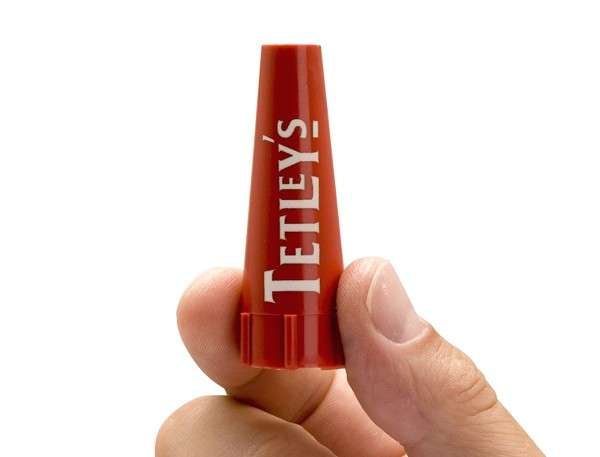
The process removes dye from the material to create the image. Iriodine creates a more even absorption barrier providing an even contrast across the part. Iriodine was one of the original materials developed by Merk, that could be used to add to materials where laser processing did not usually provide good marking.
The nozzle is laser marked on both sides, and therefore we use a rotary indexer to rotate the part, so that the marking is completed in a single process pass. Although the nozzle is cone shaped, the position of the laser focal point, is set to minimise any distortion as the beam travels down the length of the part during the mark process.
The Role of Receptive Additives in Laser Marking
Receptive additives are chemical agents added to plastic formulations to improve their interaction with laser energy. These additives work by enhancing the plastic’s ability to absorb the laser’s wavelength, ensuring a more consistent and visible mark. When the laser strikes the surface, the additive reacts to the energy, creating a high-contrast mark without compromising the integrity of the plastic component.
The key benefits of using receptive additives include:
- Enhanced contrast: Receptive additives allow for clearer, more legible marks, even on light or transparent plastics that would normally present a challenge.
- Increased marking speed: By improving the material’s absorption of laser energy, receptive additives reduce the time needed for marking, increasing production efficiency.
- Improved versatility: Plastics that were previously difficult to mark, such as polyolefins (PE, PP), can now be laser marked effectively with the addition of the right additive.
Types of Receptive Additives
The choice of receptive additive depends on the specific laser technology and plastic material being used. Common types of additives include:
- Carbon-based additives: These additives absorb laser energy and convert it into heat, which creates a dark mark on the plastic surface. They are particularly effective for CO₂ and Ndlaser systems.
- Metal-based additives: These additives produce a chemical reaction when exposed to a laser, often resulting in a colour change that enhances contrast. They are useful for marking light-coloured or transparent plastics.
- Organic pigments: Some organic compounds are specifically formulated to interact with lasers, allowing for consistent marking on a wide range of plastic types.
- Inorganic pigments: Inorganic additives, like titanium dioxide or other metal oxides, can be blended into plastics to improve their marking properties, particularly for high-contrast marks.
Benefits of Laser Marking with Receptive Additives
The incorporation of receptive additives in laser marking processes for plastic components has resulted in significant benefits across various industries:
- Automotive Industry: In automotive manufacturing, plastics are extensively used in interior components, electronics housing, and under-the-hood applications. Receptive additives enable durable, high-contrast markings that ensure traceability and compliance with safety standards.
- Medical Devices: For medical-grade plastics, which often need to be sterilised and must meet strict regulatory standards, laser marking with additives provides permanent, sterile-safe markings, essential for product identification and tracking.
- Consumer Goods: In the production of electronic devices, home appliances, and packaging, the need for product branding and traceability is paramount. Receptive additives allow for clearer markings that enhance both product aesthetics and functionality.
- Aerospace and Defence: Components in aerospace and defence systems often require highly durable markings that can withstand extreme environments. Additives ensure that these markings are permanent and legible under harsh conditions, contributing to overall product reliability and safety.
Environmental and Economic Advantages
Beyond improving the quality and efficiency of laser marking on plastic components, receptive additives also offer environmental and economic advantages:
- Less waste: Unlike traditional printing or labelling methods that involve inks, solvents, or stickers, laser marking with additives generates minimal waste, as there are no consumables to dispose of.
- Cost savings: The enhanced efficiency of the marking process reduces energy consumption and labour costs, while the longevity of the marks eliminates the need for re-marking or replacing worn labels.
- Sustainability: By reducing the need for additional materials like inks and labels, laser marking with receptive additives aligns with sustainability goals, contributing to reduced environmental impact in manufacturing processes.
Conclusion
The use of receptive additives in the laser marking of plastic components is a game-changer for industries requiring precision, durability, and efficiency. By addressing the challenges inherent in marking diverse plastics, these additives enable manufacturers to create permanent, high-contrast marks that enhance traceability, regulatory compliance, and product appeal. As the demand for high-performance plastics continues to rise, receptive additives will play an increasingly critical role in ensuring that laser marking remains a reliable and versatile solution in modern manufacturing processes.
If you would like further information on this application, or any other application, please request a call back or, talk to one of our laser marking specialists by going to our contact page – link below.
Contact Us for Laser Engraving, Marking & Cutting Advice (thinklaser.theprogressteam.com/)
