Optimising Laser Engraving on Multi-Layer Laminate Materials
Laser engraving has become an essential technology for creating high-precision, high-contrast markings across various industries. Laser engraving Multi layer laminate materials, with their unique layered construction, present an ideal medium for laser engraving, offering versatility and durability in applications such as signage, labels, and industrial components. Understanding the process and benefits of engraving these materials ensures optimal results and maximises efficiency.
What Are Multi-Layer Laminate Materials?
Multi-layer laminate materials are composed of a base layer (core) and one or more surface layers, each with distinct properties. Commonly used in engraving applications, these materials are designed so that the laser removes the top layer to reveal the contrasting core beneath.
Materials frequently used in laser engraving include:
- Acrylic laminates: Ideal for vibrant colours and durability.
- Plastic laminates: Often used for signage and labels due to their flexibility.
- Metallic-finish laminates: Provide a high-end aesthetic for nameplates and awards.
The contrasting colour layers make them particularly suited for applications requiring clear and legible markings.

How Laser Engraving Works on Laminates
Laser engraving involves directing a focused laser beam onto the surface of the laminate material. The energy from the laser vaporises or removes the top layer, exposing the core layer underneath. The result is a sharp, high-contrast mark that is both durable and precise.
Steps in the Process
- Material Preparation: Clean the laminate to ensure no debris or contaminants interfere with the engraving process.
- Design Setup: Input the desired design into the laser system’s software, ensuring optimal settings for power, speed, and focus.
- Engraving: Execute the process, where the laser selectively removes the surface layer according to the design.
- Finishing: Clean the engraved material to remove any residue, ensuring a polished and professional finish.
Key Benefits of Laser Engraving Multi-Layer Laminates
- High Contrast and Clarity: The contrasting colours of the layers ensure that text, logos, and designs are easily readable and visually striking.
- Durability: Laser-engraved markings are resistant to wear, making them suitable for long-term use in demanding environments.
- Customisation: Designs can be tailored to meet specific requirements, from intricate patterns to detailed text.
- Non-Contact Process: As a non-contact technique, laser engraving avoids mechanical stress on the material, preserving its structural integrity.
- Eco-Friendly: The precise nature of laser engraving minimises material waste compared to traditional mechanical methods.
Real Life Laser Engraving Multi Layer Laminate Materials Application
The image is a 2D code, known as a QR code, generated by laser engraving, and contains a URL address that when scanned, takes you to a website where you can find the history of the deceased (the main target audience is pet owners). Apparently, this service is very big in Japan and North America, but has yet to take off over here in the UK . The laminate has the top surface removed by laser engraving, to expose the second layer of black to create the black and white code.
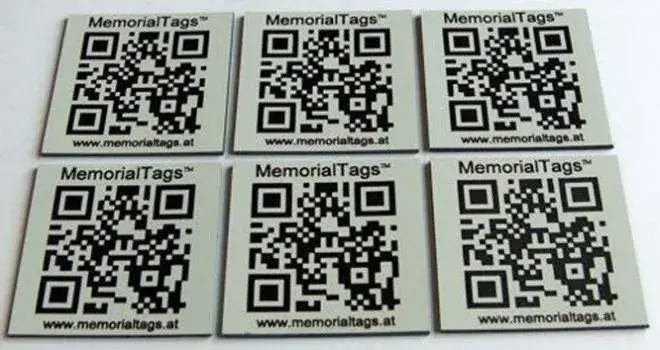
Laser engraving multi layer laminate, is an effective way of achieving greater contrast when attempting to create a black mark. This is often done by coating the material in a substance through a process called CerMark. The end result, is a permanent laser marking on the surface of the material. The laser source was CO2, with the marking being very fast and clean.
Applications of Laser-Engraved Laminate Materials
1. Industrial Labelling
Laser-engraved laminate materials are widely used for equipment labels, control panels, and safety signs due to their resilience and legibility.
2. Custom Signage
Businesses and institutions use laminate materials to create durable, professional signs with vibrant colours and detailed graphics.
3. Awards and Plaques
The aesthetic appeal of metallic-finish laminates makes them ideal for engraving personalised awards, trophies, and plaques.
4. Branding and Nameplates
Laser engraving ensures that company logos, names, and information remain prominent and intact, even in challenging environments.
Optimising Laser Settings for Laminates
To achieve the best results, it is critical to optimise laser settings based on the type of laminate material. Consider the following:
- Power: Use sufficient power to cleanly remove the top layer without damaging the core.
- Speed: Adjust the speed to ensure precise detailing; slower speeds typically yield finer results.
- Focus: Maintain proper focus to achieve consistent engraving depth.
- Ventilation: Ensure adequate ventilation or extraction to remove fumes generated during the process.
Challenges and Solutions
- Overburning: Excessive power can damage the core or surrounding areas. Solution: Use test runs to refine settings.
- Residue Buildup: Residue from the top layer can mar the finish. Solution: Clean the surface after engraving.
- Material Warping: Thin laminates may warp under high heat. Solution: Use lower power and faster speeds to minimise heat impact.
Conclusion
Laser engraving on multi-layer laminate materials offers a perfect blend of functionality and aesthetics, making it a go-to choice for various industries. By understanding the material properties, fine-tuning laser settings, and following best practices, businesses can achieve precise, durable, and visually appealing results. With its versatility and efficiency, laser engraving continues to unlock new possibilities in the world of multi-layer laminates.
If you would like further information on this application, or any other application, please request a call back or, talk to one of our laser marking specialists by going to our contact page – link below.
Contact Us for Laser Engraving, Marking & Cutting Advice (thinklaser.theprogressteam.com/)
