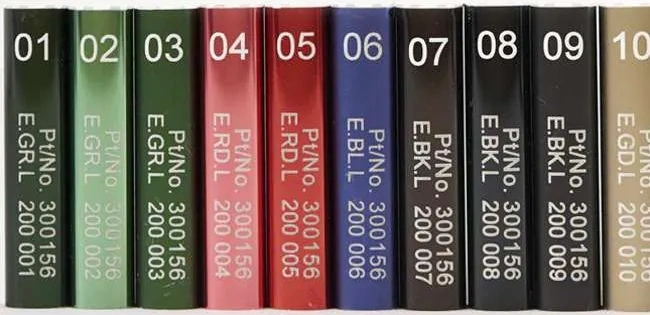
In today’s fast-paced manufacturing environment, the need for precise component identification and traceability has never been greater. Laser marking has emerged as a leading solution for these requirements, offering unmatched accuracy, durability, and efficiency. Thinklaser Limited has been at the forefront of this technology, providing businesses with high-quality laser marking solutions for a wide range of applications. In this case study, we explore how laser marking significantly enhances component identification and traceability in various industries.
The Importance of Laser Marking for Component Identification and Traceability
Component identification and traceability are critical in industries such as automotive, aerospace, electronics, and medical devices, where every part must be accounted for throughout its lifecycle. Accurate identification helps manufacturers ensure quality control, manage inventory, streamline production processes, and comply with industry regulations. Traceability enables tracking of each component back to its origin, aiding in recall management, warranty claims, and improving overall product reliability.
Laser marking stands out as an ideal method for creating precise, durable marks that are resistant to wear and tear, making it a perfect choice for identifying and tracking components in challenging environments.
A Thinklaser Real World Application
The laser marking of plastics falls between the two main wavelengths of laser used in industry today (YAG and CO2). In this case, we have used Fibre laser marker as it is close to YAG wavelength.
The product is an identification plate, used for a sub-assembly for a well known earth movement vehicle manufacturer. The laser marking for component identification was to contain a combination of information for traceability as well as environmental instructions.
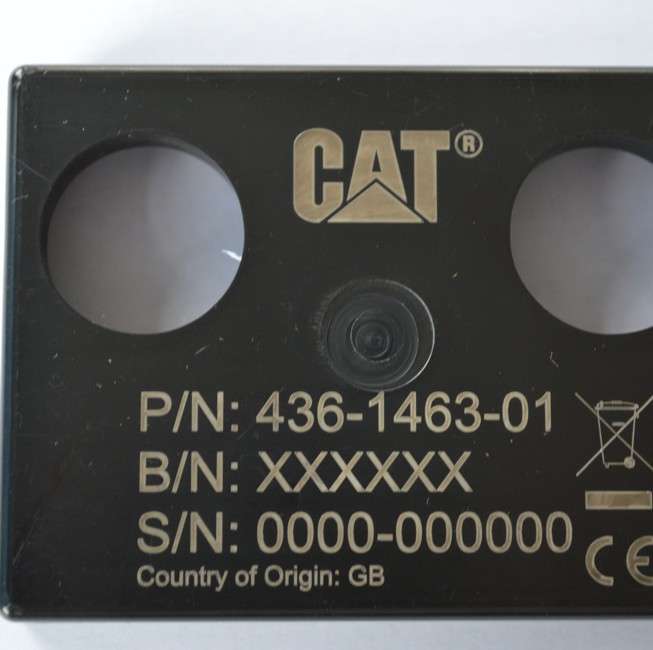
The fibre laser provides a positive result on the materials, although the process window is very small. Some variation across the mark can be seen. In some cases, where power levels are too high surface blistering can occur.
There are a number of differing changes to the material surface during laser marking, and it is very dependent on the material itself as to which one occurs.
- A thermochemical foaming, creating gas bubbles to the surface of the material, is the most common. The light scatters across the affected area producing the light marking that appears.
- Bleaching is another effect that is common. Here the pigment used to achieve the product colour is removed creating a visual difference.
- The third mechanism is vaporisation where the material is heated, very quickly, to the point where it vaporises, and is removed leaving behind the created image.
These three laser marking effects, can be enhanced by the adding of laser sensitive additives and can generate considerable advantages. The additive acts as an absorption barrier, boosting the ability of the laser to process better. In some materials, the laser marking ability would not be possible without this additive. In this example, we did not feel the additional cost to the component by adding additives, was worth the potential advances in the mark quality, and they were happy with the results achieved.
The Laser Marking Process
At Thinklaser Limited, we use our advanced Lightblade laser systems to perform high-precision marking on various materials, including metals, plastics, ceramics, and more. Here’s an overview of the laser marking process we employ to achieve superior component identification and traceability:
1. Material Preparation
Before marking, the surface of the component is cleaned to remove any oils, residues, or contaminants that could affect the quality of the laser mark. A clean surface ensures better adhesion and clarity of the marking.
2. Optimising Laser Parameters
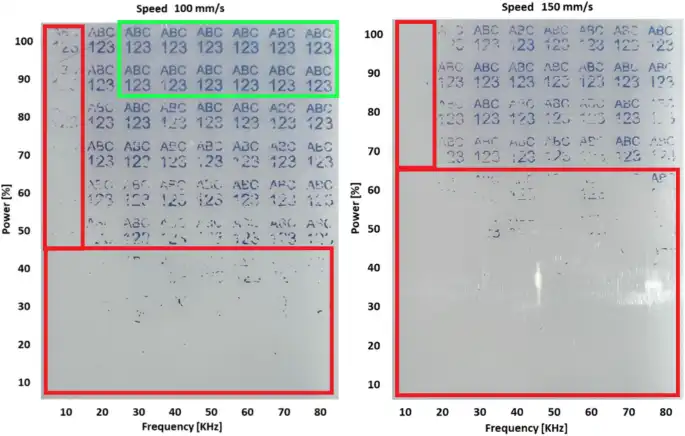
We customise the laser settings—including power, speed, frequency, and focus—based on the material type and the desired mark. This precise adjustment ensures that the marking process produces clear, legible information without damaging the integrity of the component.
3. Laser Marking Execution
Using our jobshop laser systems, we execute the marking process to create high-contrast, permanent marks. These marks can include serial numbers, barcodes, QR codes, logos, batch numbers, and other critical information needed for identification and traceability.
4. Quality Inspection
Each marked component undergoes a thorough inspection to ensure the accuracy, clarity, and durability of the marks. We use advanced quality control techniques to verify that the marks meet industry
standards and the specific requirements of our clients.
Benefits of Laser Marking for Component Identification and Traceability
Laser marking offers several key advantages over traditional marking methods, particularly when it comes to component identification and traceability:
- Permanent and Durable Markings: Laser marks are resistant to abrasion, chemicals, and extreme temperatures, ensuring that the information remains intact throughout the component’s lifecycle.
- High Precision and Accuracy: Laser marking provides exceptional precision, making it ideal for creating small, intricate designs or text on compact components.
- Versatile Material Compatibility: Our Jobshop laser systems are compatible with a wide range of materials, allowing for consistent and high-quality marks on metals, plastics, ceramics, and more.
- Eco-Friendly Process: Unlike other marking techniques, laser marking does not require the use of inks, chemicals, or consumables, making it a more environmentally sustainable solution.

Real-World Applications
Laser marking for component identification and traceability has widespread applications across many industries:
- Automotive: Marking parts with serial numbers, batch codes, and barcodes to facilitate inventory management and quality control.
- Electronics: Marking circuit boards and electronic components with unique identifiers for efficient tracking and authentication.
- Medical Devices: Ensuring compliance with regulatory requirements by laser marking devices with lot numbers, expiration dates, and other vital information.
- Aerospace: Marking aircraft parts with precise data for traceability, maintenance history, and regulatory compliance.
FAQs
- 1. What types of information can be laser marked for traceability?
Laser marking can include a wide variety of information for traceability, such as serial numbers, barcodes, QR codes, lot numbers, production dates, company logos, and other identifiers. These marks help track the product through its entire lifecycle, ensuring traceability and authenticity.
- 2. Can laser marking damage the component or affect its performance?
No, laser marking is a non-contact process that does not physically alter the structure of the component. Our laser systems are designed to create precise markings without causing damage or affecting the component’s performance or durability.
- 3. How durable are laser-marked components in harsh environments?
Laser-marked components are highly durable and can withstand harsh environments, including exposure to chemicals, moisture, extreme temperatures, and abrasive conditions. The markings are designed to remain clear and legible throughout the product’s entire lifespan.
Conclusion
Laser marking is a powerful tool for enhancing component identification and traceability across various industries. At Thinklaser Limited, we leverage our state-of-the-art laser systems to provide precise, durable, and environmentally friendly marking solutions tailored to meet the unique needs of our clients.
If you’re looking to improve your traceability processes with reliable laser marking solutions, contact Thinklaser Limited today. We are here to deliver customised marking solutions that align with your specific requirements and industry standards.
Get in Touch
To learn more about how our laser marking solutions can enhance your component identification and traceability, reach out to us today. We look forward to helping you streamline your processes and achieve greater efficiency in your operations!
Contact Us for Laser Engraving, Marking & Cutting Advice (thinklaser.theprogressteam.com/)