In this article, we explore how ASCll art created using laser engraving can bring life back to an old favourite media format.
ASCII art, an art form that uses characters from the ASCII (American Standard Code for Information Interchange) set to create images, has been a popular digital art style since the early days of computers. With advancements in technology, it is now possible to have ASCII Art created using laser engraving on a variety of substrates.
The combination of ASCII art and laser engraving brings together the traditional charm of text-based imagery with the precision and permanence of laser technology.
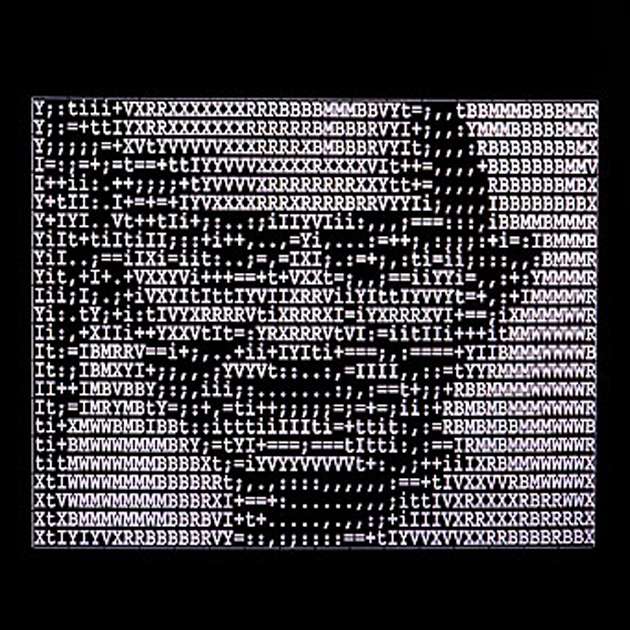
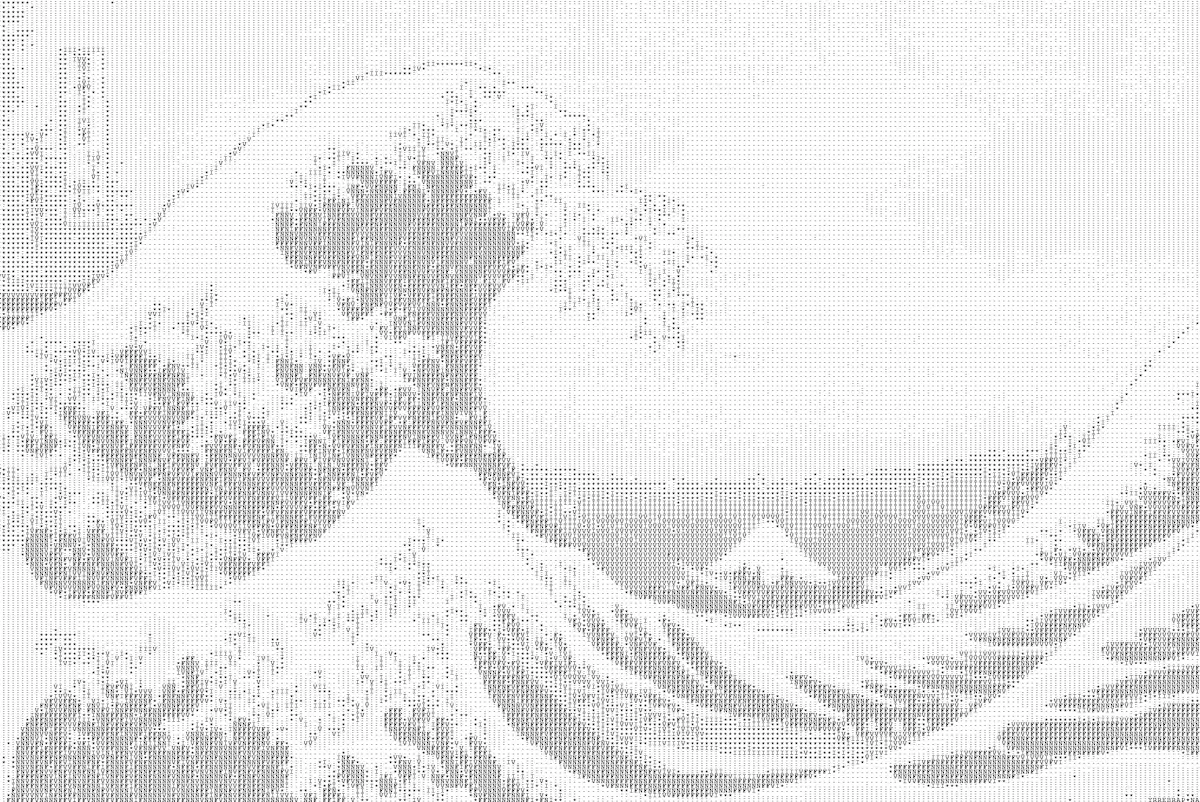
This example of ASCll art created using laser engraving is just an experiment for fun. Trident Systems
Understanding ASCII Art and Laser Engraving
What is ASCII Art?
ASCII art is a graphic design technique that uses characters and symbols from the ASCII set to create images. This art form relies on the arrangement of characters in a grid pattern to depict shapes, forms, and textures. Historically, ASCII art was used in early computer graphics, email signatures, and even in printed materials when graphical resources were limited.
What is Laser Engraving?
Laser engraving is a process that uses a focused laser beam to remove material from the surface of an object, creating detailed and permanent engravings. The laser is controlled by computer software, allowing for high precision and customization. This technique is widely used for engraving on a variety of materials, including wood, metal, glass, and plastics.
The application for ASCll Art Created Using Laser Engraving
The image of ASCll art is created by laser engraving a series of lines constructed from alphanumeric characters. Known as ASCII Art, the images can be quite striking. The original graphic is converted with a simple translation software package and imported into the laser marking software front end.
Anodised Aluminium
In this example, we have used an anodised aluminium plate. This provides us with the highest contrast levels once the process is completed.
This electrolytic passivation, is widely used across industry on aluminium for a variety of reasons. The process can also provide a huge range of colour variations through the use of colour dying. The process changes the microscopic texture of the aluminium, by modifying the crystal structure near the surface.
The laser, in the case of Nd:YAG, is used to vaporise the top surface to remove the area affected by the anodising process exposing the host material. Where a darker dye colouring is used, the contrast levels remain high between the two contrasting surface areas.
We have utilised the services of an Nd:YAG laser for this example, but you could also use a fibre laser.
CO2 Lasers
CO2 lasers can also be used to process anodised aluminium. In this case, it is the dye that is directly affected rather than the material. The energy from the laser, creates a heating action that removes the dye from the surface. The use of CO2, is generally not as well received as Nd:YAG, due to the lower quality created by the mark process.
This is directly related to the fact that the heating effect is difficult to control due to “heat creep”. The result is a fuzzy edge to the mark image, and not as crisp as with Nd:YAG. The main advantage is, that no material is removed leaving the anodising closer to its original state, as a result, per unit cost will be slightly higher with CO2 due to the process time being slower.
If you would like further information on this application, or any other application, please request a call back or, talk to one of our laser marking specialists by going to our contact page – link below.
Contact Us for Laser Engraving, Marking & Cutting Advice (thinklaser.theprogressteam.com/)