The healthcare sector demands the highest standards of accuracy, traceability, and safety. Laser marking of medical instruments has become the preferred method for achieving these requirements due to its precision, permanence, and ability to comply with strict regulatory standards. Whether marking surgical tools, implants, or diagnostic equipment, laser technology offers a reliable and efficient solution.
Real Life Example
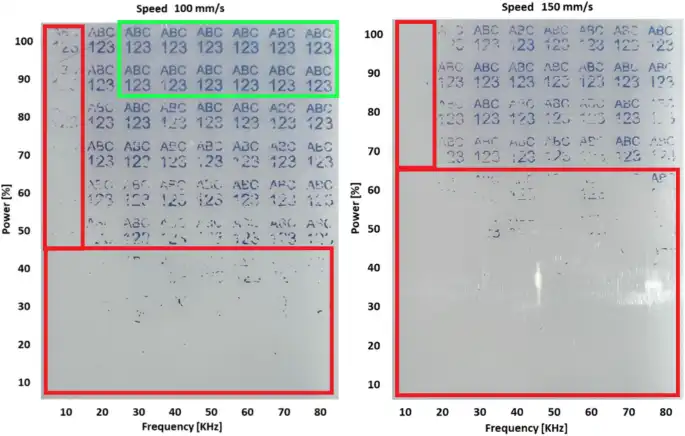
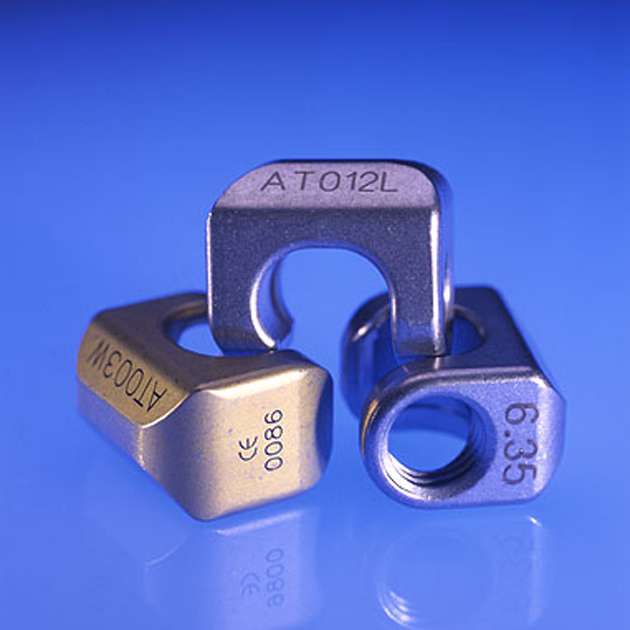
In this case study, the laser marking of medical instruments was employed to place a 2-dimensional code onto the instrument. The 2D matrix code is used for tracking the instrument to determine usage, cleaning and ownership. For a long time, laser processing has been an acceptable process for both implant and instrument marking. A laser marking process referred to an annealing or CW marking is used, whereby no material is removed, therefore no bacterial traps occur due to the marking.
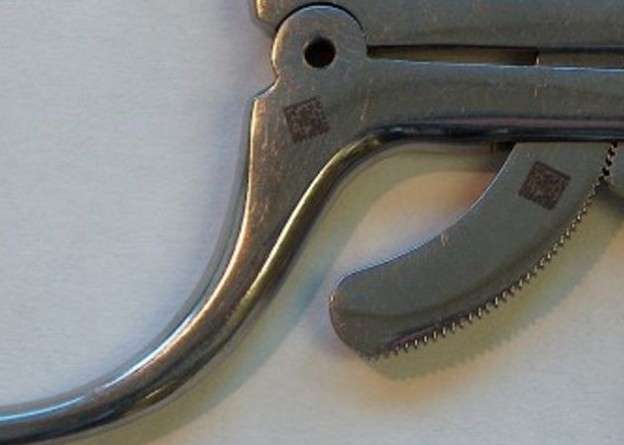
Where the laser marking occurs, the surface is heated until a colour change takes place, providing the high contrast level and the basis for achieving a good read rate with the code. This heat usually penetrates 20 to 30 µm deep in the metal surface, leaving a permanent non-abrasive mark. However, these marks can be removed in the future by re-heating the material (a minimum of 700 degrees Celsius for non-ferrous metals).
Why Laser Marking for Medical Instruments?
Laser marking has distinct advantages over traditional marking methods like engraving, etching, or ink-based printing. Here’s why it’s particularly suited for medical instruments:
- Permanent and High-Contrast Marks: Laser marking alters the surface material, creating high-contrast, legible marks that withstand repeated sterilisation processes and extensive usage. Whether it’s barcodes, serial numbers, logos, or regulatory data, the marks remain clear and readable throughout the product’s lifecycle.
- Non-Destructive Marking: The precision of laser technology ensures that marks are made without affecting the structural integrity of the instrument. This is crucial for maintaining the functionality and safety of delicate medical tools and implants.
- Compliance with Regulatory Standards: The healthcare industry is heavily regulated, with bodies like the FDA and MDR requiring unique device identification (UDI) for traceability. Laser marking allows for compliant, data-rich markings that include everything from serial numbers to QR codes, ensuring complete traceability.
- Biocompatibility: Laser marking does not involve the use of inks or chemicals, which is critical for maintaining the biocompatibility of medical instruments. The laser process is clean and precise, meeting the stringent hygiene requirements of the healthcare industry.
Types of Laser Marking for Medical Instruments
Depending on the application and material, different laser technologies can be employed for marking medical instruments:
- Fibre Lasers: Fibre lasers are highly effective for marking metals like stainless steel, titanium, and aluminium, which are commonly used in medical instruments. They produce precise, high-contrast marks ideal for barcodes, logos, and alphanumeric text.
- UV Lasers: UV lasers are used for marking sensitive materials like plastics and polymers. They are particularly useful for marking components that require fine details without causing thermal damage to the material.
- CO₂ Lasers: Although less common for metal marking, CO₂ lasers are used for marking certain coatings and non-metallic parts of medical devices.
Applications of Laser Marking in the Medical Industry
Laser marking is used across a wide range of medical instruments and devices, including:
- Surgical Instruments: Scalpels, forceps, and clamps are marked with serial numbers and manufacturer details for easy identification and traceability.
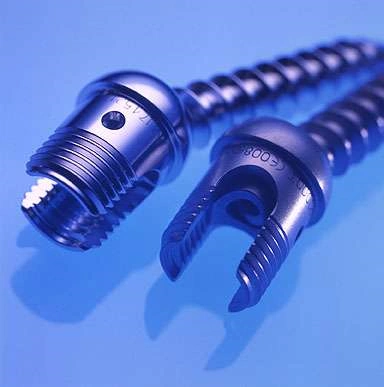
- Orthopaedic Implants: Hip joints, screws, and plates are marked with tracking information and batch codes to ensure regulatory compliance and post-surgical monitoring.
- Dental Tools: Dental instruments require precise markings for sterilisation tracking and brand identification.
- Diagnostic Equipment: Components of diagnostic machines and tools are marked with data to ensure compatibility and correct usage.
The Laser Marking Process: Key Considerations
For the laser marking of medical instruments, it’s essential to optimise the process for reliability and repeatability. Here are some key factors considered by Thinklaser Limited when developing a laser marking solution:
Material Compatibility: The laser settings are adjusted according to the type of material being marked, ensuring clean and high-contrast results.
Depth of Marking: The marking depth must be carefully controlled to maintain the instrument’s functionality and comply with regulatory requirements.
Marking Speed and Efficiency: In high-volume production environments, speed is critical. The laser mark process can be automated and integrated into existing production lines, enhancing throughput without compromising quality.
Sterilisation Resistance: The marks must withstand repeated sterilisation cycles without fading, peeling, or degrading. Laser marking is particularly advantageous as it creates marks that are resistant to harsh cleaning processes.
Why Choose Thinklaser Limited for Laser Marking of Medical Instruments?
Thinklaser Limited offers customised laser marking solutions tailored specifically to the medical industry’s needs. With a deep understanding of regulatory compliance, material properties, and production efficiency, we provide systems that deliver precise and durable marks. Our expertise covers everything from system design and integration to ongoing support and maintenance.
Whether you need a solution for marking intricate medical devices or high-volume production of surgical tools, Thinklaser Limited ensures your products meet the highest standards of quality, safety, and traceability.
If you would like further information on this laser application, or any other application, please request a call back, or talk to one of our laser marking specialists by going to our contact page – link below.
Contact Us for Laser Engraving, Marking & Cutting Advice (thinklaser.theprogressteam.com/)