In the world of precision engineering, the laser marking of stainless steel devices plays a crucial role in ensuring the traceability and identification of components. At Thinklaser Limited, one of our legacy projects involved the laser marking of stainless steel safety sensor casings, demonstrating the capabilities of our advanced Lightblade laser systems. In this case study, we’ll explore the process, challenges, and the value that laser marking adds to high-precision devices like safety sensor casings.
The Project Overview
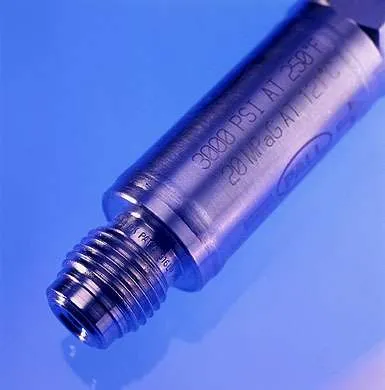
The customer approached Thinklaser Limited with a requirement to mark a series of safety sensor casings made of stainless steel. The objective was to create high-contrast, durable marks that could withstand harsh environmental conditions, ensuring the markings would remain legible and precise for the product’s entire lifespan. These markings were crucial for traceability, brand identification, and compliance with industry standards.
A substantial amount of technical information is required to be marked on this product due to its critical safety application. To achieve the dark, high-contrast mark on the stainless steel surface, the laser marking is performed in continuous wave (CW) mode. The product is rotated to three specific positions during the marking process, with the data distributed across segments of approximately 20-25 degrees each. This method of segmenting and rotating the product ensures that the information is clearly legible while maintaining cost-effectiveness in production.
Why Stainless Steel?

Stainless steel is commonly used in safety sensor casings due to its exceptional strength, corrosion resistance, and ability to endure extreme temperatures. However, these same properties can make it challenging to mark effectively without the right equipment and expertise. That’s where Thinklasers expertise in laser technology provided the perfect solution.
The Laser Marking Process
For this project, we utilised our Lightblade laser system, renowned for its precision and adaptability in handling various materials, including metals like stainless steel. The laser marking process we employed involved the following steps:
1. Surface Preparation
The stainless steel casings were thoroughly cleaned to remove any oils, residues, or contaminants that could interfere with the marking process. A clean surface ensures consistent energy absorption during laser marking, leading to high-quality results.
2. Choosing the Laser Parameters
Using our Lightblade laser system, we meticulously adjusted the laser settings to achieve optimal results. Key parameters such as laser power, speed, frequency, and pulse duration were fine-tuned to produce a high-contrast mark without compromising the integrity of the stainless steel surface. This careful adjustment ensured that the markings were deep enough to be permanent yet smooth to avoid compromising the casing’s structure.
3. Laser Marking Execution
The actual marking process was completed using a fibre laser, which is ideal for marking metals. The laser beam was directed onto the surface of the casing, creating a precise, high-contrast mark through a process called annealing. This technique produced a dark, oxide layer on the surface, which resulted in durable and corrosion-resistant markings without engraving into the material.
4. Quality Control
After the marking process, each sensor casing was inspected for accuracy, clarity, and contrast. The inspection ensured that all markings met the client’s requirements for readability and durability, even under demanding conditions.
Challenges and Solutions
1. Achieving Consistent Mark Quality
One of the main challenges when marking stainless steel is achieving consistent results, especially when dealing with varying batch qualities. We overcame this by employing our Jobshop bespoke galvo based laser systems with their high precision and control capabilities, allowing us to maintain uniform mark quality across all units.
2. Material Sensitivity
Stainless steel can be sensitive to excessive heat, which might cause unwanted surface damage. By optimising the laser’s power and speed settings, we successfully performed the marking process without causing any warping or discolouration to the casings.
Benefits of Laser Marking of Stainless Steel Devices: Safety Sensor Casings
Laser marking of stainless steel devices offers several advantages over traditional marking methods, especially when dealing with stainless steel components. Here are some key benefits experienced by our customer:
- Permanent and Durable Marks: The laser-annealed markings are resistant to abrasion, chemicals, and environmental factors, ensuring longevity.
- High Precision: Our laser systems provides unparalleled accuracy, crucial for the intricate details required in sensor casing markings.
- Non-Contact Process: Laser marking does not physically touch the material, eliminating the risk of damage or wear to the stainless steel surface.
- Fast and Efficient: Laser marking significantly reduces production time, enhancing overall productivity for the customer’s manufacturing process.
Conclusion
The successful laser marking of stainless steel safety sensor casings highlights Thinklaser Limited’s capability to deliver high-quality solutions for even the most demanding applications. Our expertise with a range of in-house laser system enables us to meet stringent requirements for traceability, durability, and precision.
If you have a project that requires high-quality laser marking, engraving, or cutting, feel free to contact Thinklaser Limited. We are here to offer customised solutions that align with your specific needs and industry standards.
Get in Touch
To learn more about our laser marking capabilities or to discuss your own requirements, please reach out to us today. We look forward to helping you achieve the perfect mark for your products!
Contact Us for Laser Engraving, Marking & Cutting Advice (thinklaser.theprogressteam.com/)
