Laser servicing for schools, businesses and workshops
Laser systems need regular maintenance to remain safe, reliable and consistent.
A routine service can help identify worn parts, contamination, alignment issues, extraction problems, cooling concerns, motion faults and other developing problems before they lead to downtime.
Thinklaser supports laser users across:
Schools and colleges
Universities and research departments
Workshops and makerspaces
Manufacturing businesses
Signage and display companies
Product design and prototyping teams
Engineering and fabrication workshops
Medical, electronics and specialist production environments
When should a laser machine be serviced?
A laser machine may need a service if:
cutting performance has dropped
engraving quality has become inconsistent
the laser beam is misaligned
mirrors or lenses are contaminated or damaged
smoke or fumes are not extracting properly
the machine is noisier than usual
the bed, gantry or motion system is not moving smoothly
the machine has intermittent faults
software communication is unreliable
the system is overdue for routine maintenance
a school or workplace safety review is required
the machine has been unused for a long period
the machine has recently been moved or reinstalled
What can be checked during a service visit?
The exact checks depend on the machine type, age, condition and fault symptoms, but a laser service visit may include inspection of:
general machine condition
laser optics
mirrors and lenses
beam alignment
motion system
belts, rails and bearings
cutting bed and work area
extraction performance
filters and ducting condition
doors, covers and interlocks
air assist system
cooling system where applicable
power delivery and visible wiring condition
software communication
controller or user interface behaviour
laser output and cutting performance
machine cleanliness and contamination
Thinklaser will advise where parts, further investigation, cleaning, alignment, replacement optics or additional repair work may be required.
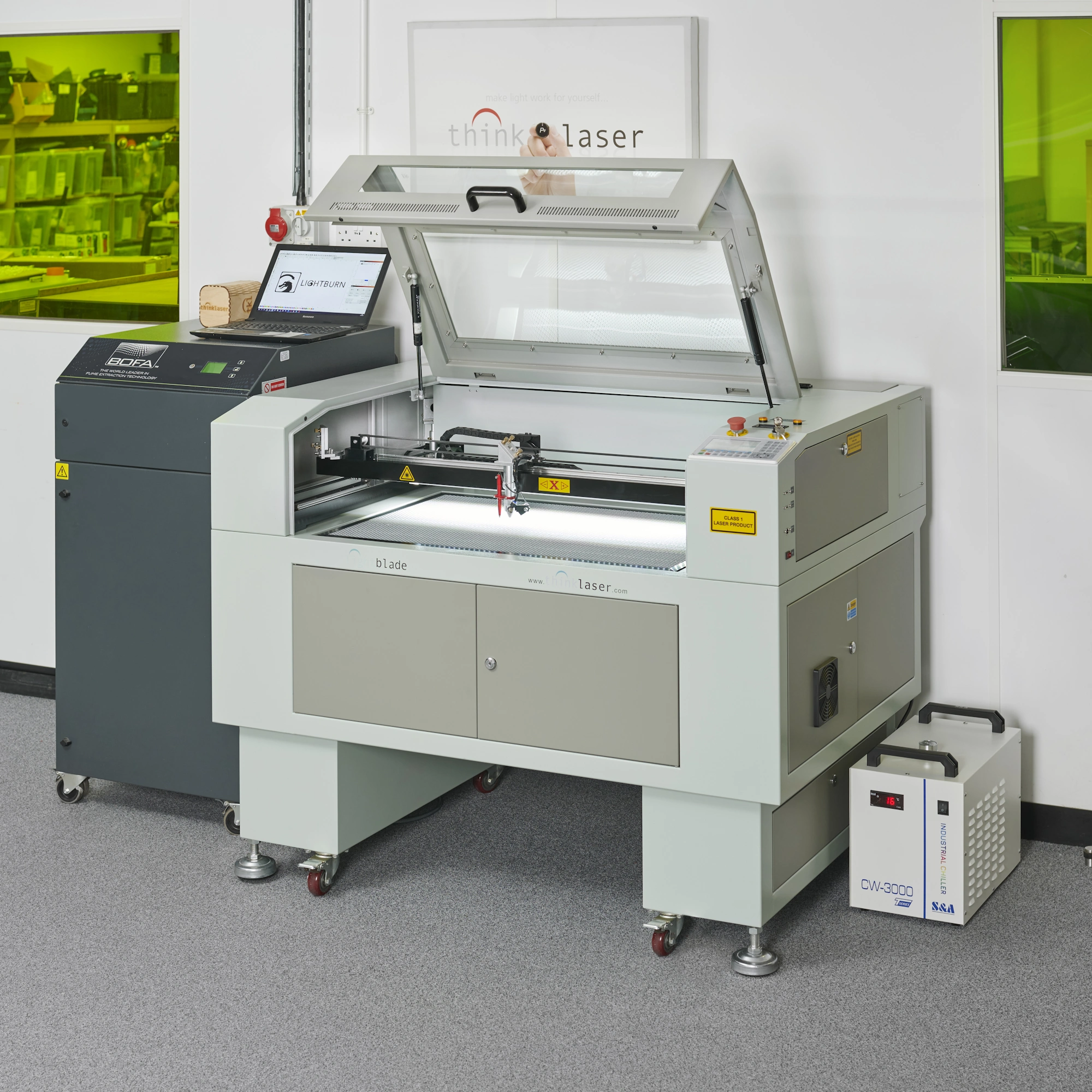

Fault finding and laser repairs
If your laser machine has developed a fault, Thinklaser can help with diagnosis and repair.
Common issues may include:
loss of laser power
poor cutting performance
inconsistent engraving
software communication problems
motion faults
homing issues
alignment problems
damaged optics
extraction faults
cooling issues
electrical or control faults
extraction faults
error messages
intermittent machine behaviour
Where possible, Thinklaser will identify the cause of the fault and advise whether the machine can be repaired, whether replacement parts are required, or whether further investigation is needed.
Emergency RepairsSupported laser machine brands
Thinklaser can support a range of laser systems and brands. Support availability depends on the model, machine age, parts availability and the nature of the fault.
Common service areas include:
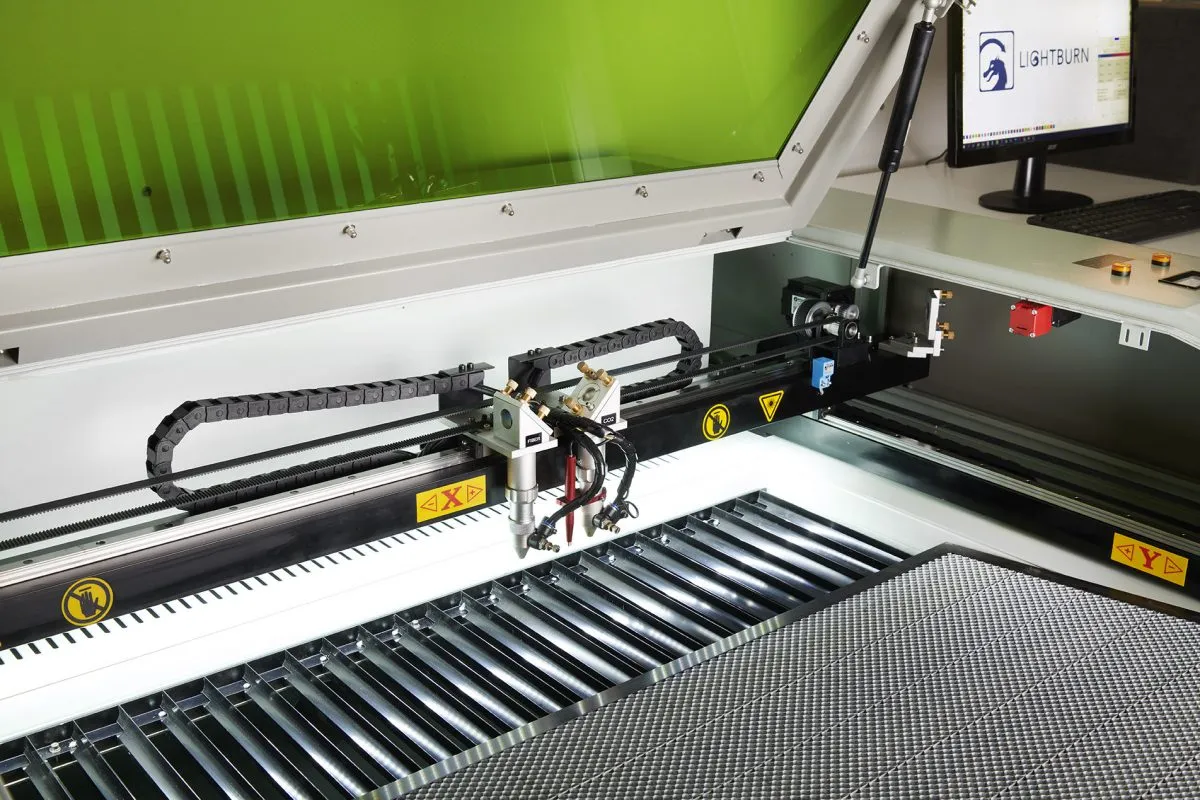
Thinklaser systems
Lightblade systems
GCC LaserPro systems
Universal Laser Systems
Trotec laser machines
Flux laser systems
HPC laser machines
OMTech laser machines
Lotus laser machines
Other CO₂ laser systems where practical
For some older, discontinued or heavily modified machines, support may depend on parts availability and the condition of the machine.
Laser servicing for schools
Schools and colleges often need support with more than basic machine repair.
A school laser cutter may also require attention to:
safe operation
extraction and filtration
LEV testing
staff training
routine maintenance
interlocks and guards
machine condition
optics and alignment
fume control
documentation and servicing records
suitability for continued use
Thinklaser can support schools with servicing, compliance-related checks, LEV testing and practical advice on keeping laser systems safe and operational.
Shop our
Extraction, filters and LEV considerations
Poor extraction can affect cut quality, machine cleanliness, safety, odour control and filter life.
During a service or support discussion, Thinklaser may also consider the extraction setup, especially where there are signs of smoke build-up, blocked filters, poor airflow, odour issues or contamination inside the laser system.
LEV testing may be required in some environments, particularly where extraction is used to control hazardous fumes, smoke or particulates.

Optics, alignment and cutting performance
Many cutting and engraving issues are caused by optics or alignment problems.
Dirty, damaged or misaligned mirrors and lenses can reduce laser power at the workpiece, cause inconsistent cutting, affect engraving quality or increase the risk of damage to other components.
Thinklaser can inspect optics, advise on replacement parts where required, and assess whether beam alignment or further machine adjustment is needed.
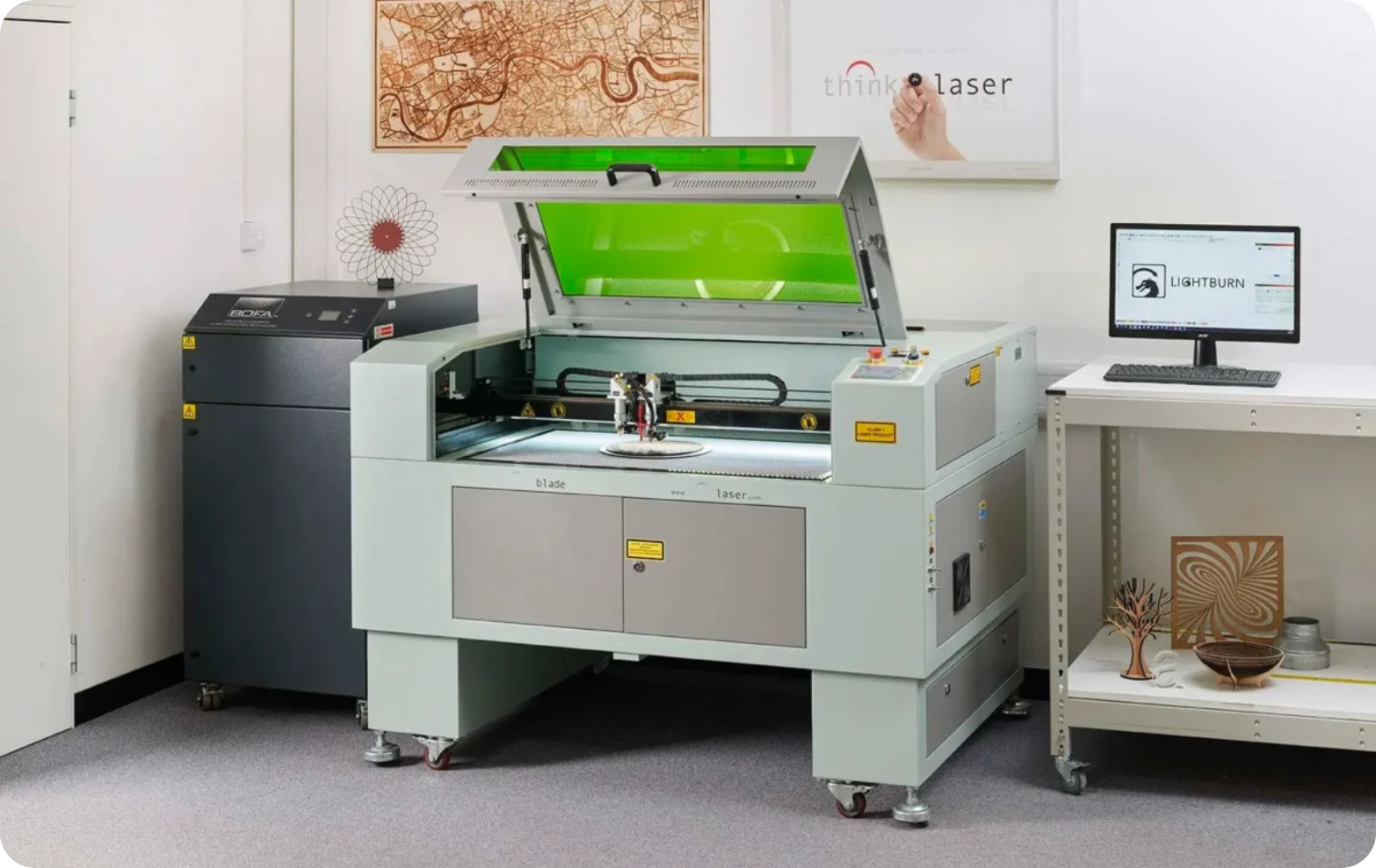
Software and communication support
Some service issues are related to software communication rather than mechanical or optical faults.
If a laser system will not communicate with the computer, cannot send jobs, loses connection, or behaves inconsistently, Thinklaser may be able to help identify whether the issue relates to software setup, cabling, controller communication, driver settings or the machine itself.
Learn more
What happens when you book a service visit?
The process will usually involve:
1
You contact Thinklaser with details of the machine and problem.
2
We ask for relevant information such as machine make, model, serial number, fault symptoms and photographs where useful.
3
We advise whether a service visit, remote discussion, parts check or further investigation is the best next step.
4
If a visit is required, we arrange a suitable time.
5
The engineer inspects the machine and advises on findings.
6
Any required parts, follow-up work or recommendations are discussed.
Information useful before contacting Thinklaser
To help us assess your service enquiry, please provide as much of the following information as possible:
machine make and model
serial number if available
approximate age of the machine
laser source type if known
approximate age of the machine
description of the fault or service requirement
when the issue started
photographs of the machine, error messages or affected parts
details of any recent changes, moves or repairs
materials being processed
extraction system details
your location
whether the machine is in a school, workshop or production environment
Frequently Asked Questions
Is Lightblade suitable for cutting acrylic?
Yes, CO₂ laser systems are commonly used for cutting and engraving acrylic. Suitability depends on the acrylic type, thickness, required edge quality and the specific machine configuration.
Can Lightblade cut metal?
Lightblade is primarily a CO₂ laser system for non-metallic materials. For metal marking or industrial traceability, a fibre or laser marking system may be more appropriate.
Is Lightblade suitable for schools?
Yes, Lightblade systems may be suitable for schools, colleges and education environments. Thinklaser can advise on the system, extraction, installation, training, servicing and compliance considerations.
What materials can a Lightblade system process?
Typical materials include acrylic, wood, card, paper, leather, rubber, laminates and selected plastics. Material suitability should always be checked, especially where fumes, coatings or unknown plastics are involved.
Can Thinklaser help with installation and training?
Yes. Thinklaser can support installation, training and ongoing service requirements.
Can Thinklaser provide extraction with the laser system?
Yes. Thinklaser can advise on suitable fume extraction options for the machine and application.
How do I know which Lightblade model I need?
The best model depends on the material, bed size, cutting thickness, expected usage and support requirements. Thinklaser can discuss your application and advise on a suitable configuration.
